The Moment My Hobby Started Making Money — and Why That Almost Ruined Everything
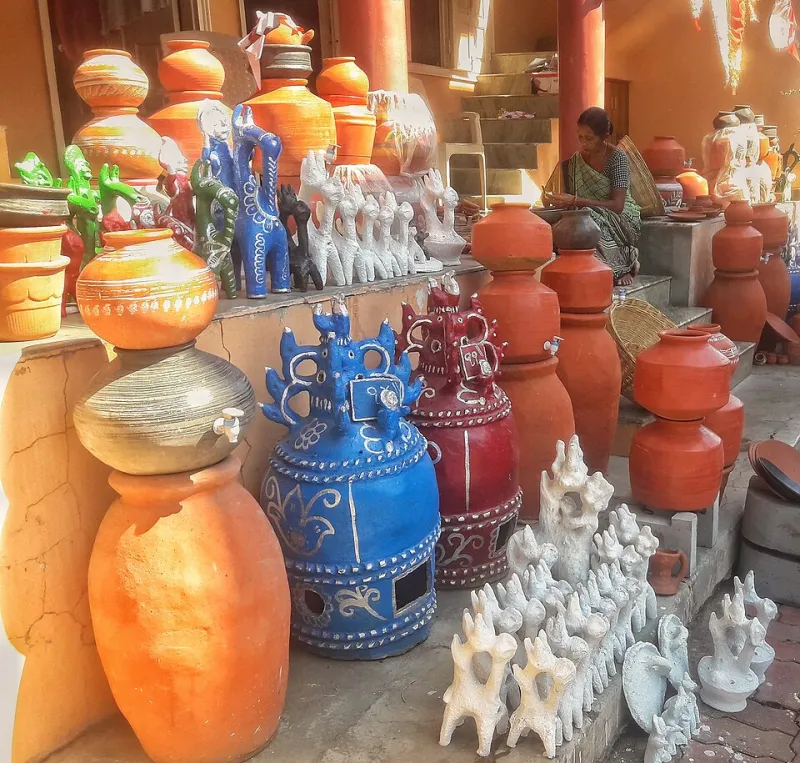
Photo: Chalunote, CC BY-SA 4.0, via Wikimedia Commons
The first time someone paid me for something I'd made purely for fun, I cried in a Trader Joe's parking lot.
Not sad crying. Just — overwhelmed crying. The kind where you're not entirely sure what emotion is actually happening, so your face picks the most dramatic option available. A woman from my neighborhood had seen a wreath I'd made for our front door, asked if I'd make one for her, and then handed me forty dollars like it was nothing.
Forty dollars. For something I'd made while watching The Great British Bake Off on a Tuesday night.
I drove to Trader Joe's feeling like I'd unlocked a secret door in my own life. By the time I got to the frozen section, the anxiety had already started.
How Five Hobbies Quietly Became Something Else
Over the past few years, this has happened to me not once but five times. Each time with a different hobby, each time with slightly different consequences, and each time teaching me something new about the complicated relationship between making things and making money.
Wreath-making was the first. What started as a seasonal craft for our own porch turned into a small Etsy shop after that parking lot moment. I made twelve wreaths that first fall. Then twenty-three. Then I was buying supplies in bulk and color-coding my inventory in a spreadsheet, and somewhere around wreath number forty I realized I hadn't made one that I actually wanted to keep in months.
Sourdough bread was next, during the pandemic, because of course it was. My starter — whom I named Gerald — became genuinely excellent, and a few neighbors started asking for loaves. I sold bread out of my kitchen for about six weeks before I realized that scaling up meant Gerald needed to be fed on a schedule, I needed to wake up at specific times, and suddenly my meditative Tuesday morning bake had a deadline attached to it. Gerald is currently in my refrigerator, unfed, and I feel guilty every time I open the door.
Hand-lettering followed. I'd been doing brush calligraphy just for the pleasure of it — addressing my own holiday cards, making little signs for the kids' rooms — when someone saw a birthday banner I'd made and asked if I did commissions. I said yes. I got five more requests from that one yes. The problem with hand-lettering commissions is that you're writing other people's words, in their chosen fonts, on their timeline. It stopped being creative expression and started feeling like transcription service with prettier pens.
Candle-making lasted the longest as a genuine dual-purpose hobby. I sold at two local craft fairs and genuinely enjoyed it — the scale felt right, the interaction with customers was fun, and I could still make weird experimental scent combinations just for myself. That one still lives in a reasonable middle ground, actually. I'll come back to that.
Food photography is the most recent and the most complicated. I started taking photos of what I cooked just because I liked the process of styling a plate. Then a local restaurant asked if I'd shoot their menu. Then a food blogger asked about rates. Then I had rates, which meant I had a business, which meant I needed contracts and invoices and a business Instagram that looked more professional than my personal one. The camera I picked up for fun now feels, on some days, like equipment.
The Specific Way Money Changes Things
Here's what I've figured out, after living through this five times: money doesn't ruin hobbies. Obligation does.
Money is just the vehicle that delivers the obligation. The moment you take payment, you've made an implicit promise — that the thing will be done, that it will meet a standard, that it will arrive on time. Those are reasonable expectations from a customer's perspective. They are also the exact opposite of what makes dabbling feel good.
Dabbling, at its core, is permission. Permission to be bad at something, to stop when you want to, to change directions mid-project, to make a wreath nobody would ever pay for because you wanted to try hot pink ribbon with dried eucalyptus. The moment someone is counting on you to deliver, that permission evaporates.
There's also a subtler thing that happens, which is harder to articulate. When a hobby is just yours, your opinion is the only one that matters. You can decide the sourdough is delicious even if the crust cracked weird. You can hang the lopsided wreath on your own door and love it precisely because of the lopsidedness. The second a customer is involved, your taste becomes secondary to theirs — and that shift is genuinely disorienting when you didn't sign up to be in the taste-approval business.
The Guilt Nobody Talks About
There's a specific flavor of guilt that comes with hobby monetization that I don't see discussed enough, especially among moms who are already swimming in guilt about everything else.
It goes like this: someone is paying you for something you used to do for free and for fun. That means you should want to do it. It means you're lucky to get paid for your passion. What kind of ungrateful person complains about that?
This kind, apparently. Me. And I'd guess a lot of you reading this.
The truth is that "getting paid for your passion" is a phrase that sounds like a dream and functions, in practice, like a trap. Not always. Not inevitably. But often enough that I think we need to say it out loud more.
So When Is It Actually Worth It?
The candle situation — the one I said still works — has taught me the most about what sustainable hobby-income actually looks like. I sell at craft fairs maybe three times a year. I make what I want to make, in scents I actually like, and I bring what I bring. If it sells, great. If it doesn't, I have a lot of very nice-smelling candles at home.
The difference is that I never let it scale past what I could do without changing my relationship to the process. I never took custom orders. I never promised quantities I'd have to stress to fulfill. The money is a bonus, not the point.
For the other four? I've mostly stepped back. Gerald the sourdough starter is on permanent hiatus. The hand-lettering commissions are closed. The food photography is something I do very selectively, for people I genuinely like, at rates that feel worth the obligation.
And the wreath shop? I relisted exactly four wreaths this fall. All four sold. And then I made one — bright orange velvet ribbon, dried lunaria, a little ridiculous — that I never listed at all. I hung it on my own door.
It's the best one I've made in two years.