My Kid's Bedtime Books Became My Hobby Bible for a Month — and a Spider Taught Me More Than I Expected
My Kid's Bedtime Books Became My Hobby Bible for a Month — and a Spider Taught Me More Than I Expected
It started the way most of my best ideas do: with zero planning and a slightly delirious Tuesday night brain.
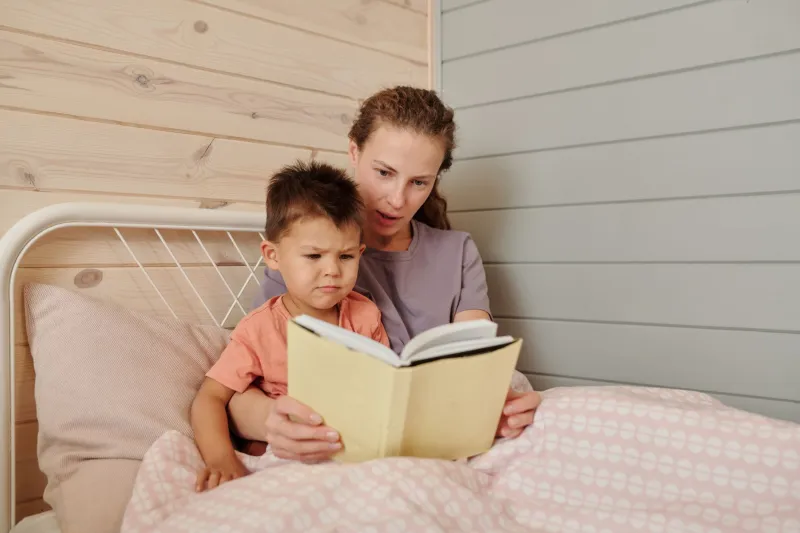
My daughter Rosie had just finished her third bedtime chapter and was demanding one more, and as I stood there scanning the stack of books on her nightstand — the mouse who ran a bakery, the old wizard with his celestial maps, the industrious spider with her extraordinary web — I had a thought. A weird one. The kind that you know is going to cost you something.
What if I just... did what they do?
Not metaphorically. Not in some vague inspirational sense. I mean literally borrowed the hobbies and skills of fictional characters from children's picture books and chapter books and attempted to practice them in real life. For one full month. Four characters. Four weeks.
Rosie thought this was the greatest idea anyone had ever had in the history of human civilization. I told her she could pick the books. She immediately took that responsibility very seriously.
The Rules (Such As They Were)
Every Sunday night, Rosie would pull a book from her current reading stack. I'd identify the main character's defining skill, craft, or creative pursuit. Then I'd spend the week genuinely attempting it — no shortcuts, no half-measures, no pretending I'd tried something when I'd really just watched a YouTube video about it for eleven minutes.
I gave myself a $15 budget per week, because I am not made of money and also because constraints make things more interesting. Rosie got to check in on my progress every night at bedtime. She took her inspector role extremely seriously.
Week One: The Mouse Baker
Rosie's first pick was a beloved picture book about a small mouse who runs a cozy village bakery. The mouse's whole deal is bread. Specifically, hand-kneaded sourdough-adjacent loaves that the illustrations make look golden and magical and completely achievable.
I have never successfully made bread in my life.
I bought flour, yeast, salt, and a little bench scraper from the dollar section at Walmart, and I watched exactly one tutorial before deciding I knew enough. Reader, I did not know enough. My first loaf came out like a decorative doorstop — dense, pale, and vaguely sad. Rosie tasted it anyway and declared it "pretty good for a human."
By Thursday, I'd gotten something resembling an actual loaf. The crust crackled. The inside had actual air pockets. I may have cried a little. We ate it with butter at the kitchen table at 8 p.m. on a school night and it was one of those small, perfect moments that you don't plan for.
Verdict: Bread-making is staying in my life. The mouse was right.
Week Two: The Wizard's Star Charts
Rosie selected a middle-grade fantasy novel where the elderly wizard protagonist spends his evenings mapping constellations by hand — hand-drawing star positions in a leather journal, noting their seasonal drift, annotating with mythology.
I am not an elderly wizard. I do, however, own a composition notebook and a fine-tip Sharpie.
I downloaded a free stargazing app (SkyView Lite — it's genuinely excellent and costs nothing), grabbed a lawn chair, and spent three nights in my backyard with a flashlight and my notebook attempting to sketch what I could actually see above my very light-polluted suburban neighborhood. Which was not a lot. But what I could find, I drew.
I also fell down a mythology rabbit hole that ate approximately four hours of a Wednesday afternoon, and I regret nothing.
Rosie asked to see my star journal every night. By Friday she was adding her own drawings to the margins — little cartoon moons and rocket ships. The journal is now technically ours.
Verdict: Astronomy journaling is slow, meditative, and surprisingly moving. Would absolutely recommend it to anyone who needs an excuse to sit quietly in the dark.
Week Three: The Spider's Weaving
Okay, you know which book. Everyone knows which book. The spider who weaves words into her web is practically a cultural institution, and Rosie picked it with an air of someone who had been planning this all along.
Weaving. She wanted me to learn weaving.
I found a small cardboard loom tutorial online, made one from a cereal box, and bought a skein of chunky yarn from the craft aisle at Target. Actual loom weaving — even the cardboard variety — is more technical than it looks. The over-under rhythm took me a full afternoon to stop fighting against. My first attempt looked like something had gone wrong. My second attempt looked like something had gone slightly less wrong.
But by the end of the week I had a small, imperfect, completely charming little woven rectangle that Rosie immediately claimed as a blanket for her stuffed rabbit.
I didn't argue. That felt correct.
Verdict: Weaving is meditative in the same way that bread-kneading is meditative — your hands get busy and your brain gets quiet. Two for two on the "accidentally therapeutic" hobby scale.
Week Four: The Girl Who Pressed Flowers
For the final week, Rosie picked a quieter picture book — a gentle story about a girl who collects and presses wildflowers to remember the places she's traveled. The hobby was obvious: flower pressing.
This one surprised me the most, because I expected it to feel fussy and slow. Instead, it felt like permission to pay attention to things I usually walk past. I started noticing plants everywhere — in the backyard, along the sidewalk on school pickup walks, in the little strip of wildflowers near the grocery store parking lot.
I pressed them between the pages of heavy cookbooks. I labeled them in my notebook. I made a small framed arrangement that now lives on my kitchen windowsill and makes me unreasonably happy every morning.
Rosie and I did the last round of pressing together on a Saturday afternoon, both of us hunched over the coffee table with tweezers and parchment paper, completely absorbed. No screens. No negotiating. Just flowers and quiet and her small hands next to mine.
Verdict: Flower pressing is the sneaky winner of this whole experiment. Simple, cheap, beautiful, and it turns out kids love it too.
What Living Like a Fairy Tale Actually Taught Me
Here's the thing nobody tells you about using children's books as a creative compass: the hobbies in those stories are almost always tactile, slow, and tied to something made by hand. There's no scrolling. There's no optimization. There's just a mouse and her bread, a spider and her web, a girl and her flowers.
Maybe that's why they resonate with kids so deeply. And maybe that's exactly why I needed them.
This month reminded me that the best hobbies aren't the ones that produce impressive results — they're the ones that pull you into the present tense. That make your hands do something while your mind exhales.
Also, Rosie now wants to do a second round where she picks books specifically to torture me. She's already chosen one about a boy who builds boats.
I told her absolutely not.
I'm already looking up boat-building tutorials.
Want to try this with your own kid's book stack? Start with just one character and one week — and let them pick. The chaos is the point.