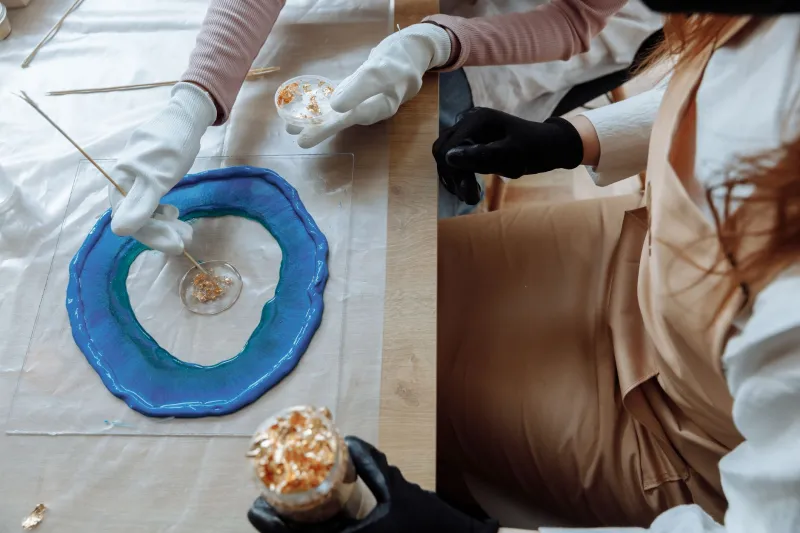
My Mom's Basement Was a Graveyard of Unfinished Dreams — Spending a Week Down There Changed Everything
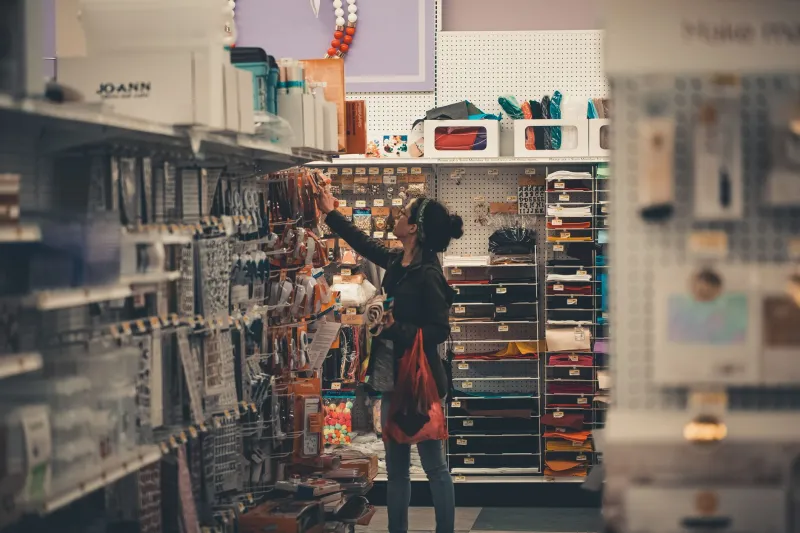
The basement door sticks. It always has. You have to lean into it with your shoulder, give it a little attitude, and then suddenly you're hit with the smell — that specific mix of cedar, old paper, and something faintly floral that I can only describe as the 1980s. My mom's hobby basement is not a Pinterest board. It is not an organized craft room with labeled bins and a pegboard wall. It is a beautiful, chaotic, slightly damp archive of every creative impulse she ever had and then quietly set aside.
I've been tiptoeing around it for years. But last month, I gave myself one week to go in, dig through everything, and actually use what I found. No purchasing allowed. No googling "beginner tutorials." Just me, whatever was down there, and the audacity to try.
What happened over those seven days cracked me open in ways I genuinely did not see coming.
The Guilt Hits Before You Even Pick Anything Up
Here's the thing nobody warns you about when you inherit a parent's creative clutter: the guilt shows up first. I'm standing in front of a shelf of watercolor palettes — some dried out, some still perfectly viable — and I'm immediately calculating what my mom must have spent on all of this. The macramé cord still in its original packaging. The calligraphy set with every nib intact. A bread-making kit from a Williams-Sonoma catalog that I'm pretty sure arrived during the Clinton administration.
She didn't fail at these things. She got busy. She had us. She had work and car pools and the general relentless machinery of raising a family. But standing there surrounded by the physical evidence of all those shelved passions, I felt this weird grief I wasn't expecting.
And then I picked up a paintbrush, and the grief got a little quieter.
Day One: The Watercolors Humbled Me Immediately
I started with what looked the least intimidating — a set of Winsor & Newton watercolors that still had most of their pigment. I found a pad of cold-press paper behind a box of Reader's Digest Condensed Books and I just... started. No plan. No YouTube video. Just water and color and a total lack of technique.
My first attempt looked like a weather map. My second looked like what happens when a toddler finds your makeup bag. But by the third try, something loosened up. I stopped trying to make it look like anything and started just moving the brush around to see what happened. Somewhere around attempt number six, I made something that genuinely surprised me — a loose, blurry landscape that my daughter taped to the refrigerator without me asking her to.
I'm not a watercolor artist. But I might be someone who needs watercolors. That's a distinction I didn't know existed until that afternoon.
The Loom Was a Whole Different Story
Mid-week, I found the loom. It's a rigid heddle loom, and it still had a half-finished project on it — cream-colored yarn with a stripe of rust orange, maybe four inches of actual fabric woven before my mom apparently moved on with her life. I stared at it for a long time before I decided I had to finish it.
I will not pretend this went smoothly. I watched exactly one video on my phone (I gave myself a grace period for tools I'd literally never touched before), spent forty-five minutes figuring out which direction to pull the shuttle, and broke two warp threads before I found a rhythm. But here's the thing about weaving that I did not expect: it is meditative in a way that felt almost aggressive. Your hands just keep doing the thing. Pass, beat, turn. Pass, beat, turn. My brain, which normally runs about fourteen tabs at once, went genuinely quiet.
I finished my mom's abandoned project on day five. It became a small table runner that now sits on my kitchen island. She cried a little when I sent her a photo. I cried a little writing that sentence.
What Someone Else's Unfinished Projects Actually Teach You
Here's the unexpected thesis of my week in the basement: your parents' abandoned hobbies are basically a personality test you never signed up to take.
My mom gravitated toward making things with her hands — fiber arts, painting, bread-making. She liked processes that had a satisfying end product, something you could hold or eat or wear. And the more I dug through her shelves, the more I recognized myself in those choices. I've been drawn to the same kinds of hobbies my whole adult life without ever connecting them to her. The candle-making phase. The sourdough era. The very brief but deeply committed polymer clay period of 2021.
I didn't inherit her eye color or her patience for small talk. But I apparently inherited her need to make things with her hands, and that felt like the best kind of surprise.
The Real Takeaway Isn't About Hobbies at All
By day seven, I had used watercolors, finished a weaving project, attempted (and mostly failed at) calligraphy, made a genuinely edible loaf of bread from the old Williams-Sonoma kit, and spent one very confusing afternoon with a rubber stamp set that I still don't fully understand.
None of it was polished. None of it was Instagrammable in the way we're conditioned to want things to be. But all of it was mine — or rather, it started as hers and became ours, in this quiet, intergenerational way that I didn't have the language for until I was standing in the middle of it.
If your parents have a basement or a closet or a garage shelf full of things they meant to get back to someday, I'm not saying you need to go excavate it. But if you're looking for a creative reset that doesn't cost you anything except a little time and a willingness to be a beginner, there might be a whole treasure chest of unfinished stories just waiting for someone to pick up where they left off.
Sometimes the best hobby isn't one you discover. It's one you inherit.
Have a parent's abandoned hobby collection gathering dust? Tell me what's in it — I'm genuinely curious what other families are hoarding in their basements.