We Swapped Hobbies With Our Kids for 30 Days and I Have Never Been More Humbled in My Life
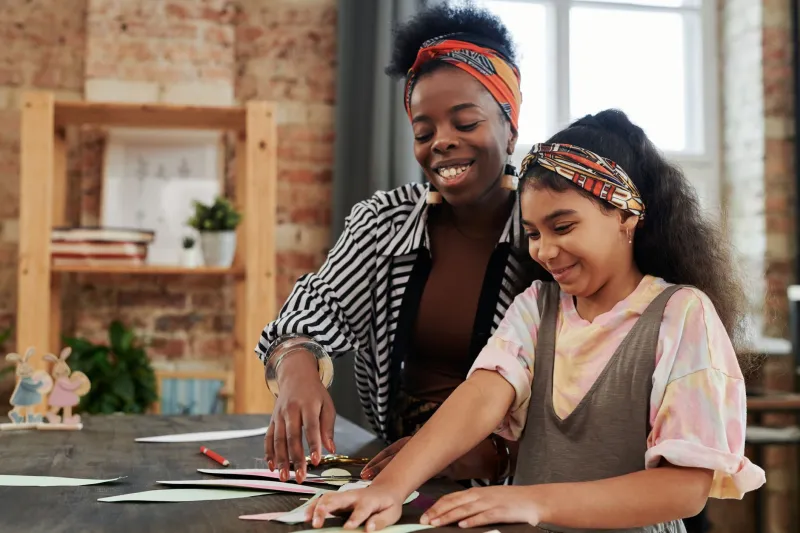
The idea started, as most of our family experiments do, with someone saying something slightly condescending at the dinner table.
I don't remember exactly what I said. Something along the lines of "it's not that complicated, it's just Minecraft" — which, I want to be upfront about, is one of the most incorrect sentences I have ever spoken in my life. My daughter, Lily, who is ten and has been playing since she was six, looked at me with the particular patience of someone who has decided not to argue with a person who doesn't know what they don't know.
"You should try it," she said.
"Fine," I said.
And then, because I can never leave a thing small, I turned to my husband Dan and said we should make it a whole family experiment. We'd each take on one of the kids' hobbies for a month. They'd each take on one of ours. Total swap. Document everything.
Dan looked at me the way he always does when I suggest things at dinner. "Okay," he said, in the tone that means I already know how this ends.
Reader, he was right. But not in the way either of us expected.
The Assignment Board
We made it official with a whiteboard in the kitchen. Each person wrote down their current "main" hobby — the thing they'd been most into lately. Then we drew names for who'd swap with whom.
The pairings:
- Me → Lily's Minecraft world-building
- Lily → my watercolor practice
- Dan → our son Owen's competitive jump rope (yes, that's a sport, yes, Owen is very serious about it)
- Owen, age 13 → Dan's woodworking corner
We set three ground rules. One: you had to spend at least 20 minutes on the assigned hobby, three times a week. Two: you couldn't mock the hobby, even internally — or at least, you had to keep the mocking to yourself until the debrief at the end of the month. Three: you had to ask the original hobby-holder for help at least once, and actually listen.
Rule three turned out to be the whole experiment, as it turned out.
Week One: Confidence Meets Reality
I sat down with Lily's laptop on a Sunday afternoon feeling pretty good about myself. I've watched her play. I know it's blocks. I understand the general concept. I've heard the word "redstone" approximately four thousand times.
Forty-five minutes later, I had died seven times, accidentally flooded my own house, and killed a sheep I was trying to befriend. Lily watched silently from across the room for about three minutes before she couldn't take it anymore.
"Mom. You need to stop hitting things."
"I'm trying to build."
"You're punching dirt. That's not building."
What followed was a twenty-minute tutorial that I can only describe as Lily patiently explaining the laws of physics to someone who had apparently never encountered them. The game has systems. It has logic. It has a creative architecture that rewards planning, spatial thinking, and resource management in ways I genuinely hadn't noticed because I'd been watching from the outside and seeing: blocks.
By week two, I had a small but structurally sound house. Lily said it was "fine." Coming from her, that felt like a standing ovation.
Dan and the Jump Rope Situation
My husband is a competent, capable adult who builds furniture in his garage with actual power tools. He was humbled by a jump rope within four minutes.
Owen's competitive jump rope practice involves speed jumping, freestyle tricks, and coordinated team routines. Dan did not know any of this. Dan thought jump rope was a thing you did in second grade PE.
Owen was, to his credit, incredibly kind about it. He broke down the footwork. He explained the timing. He demonstrated a basic double-under with the casual ease of someone who has done it ten thousand times, which he has. Dan attempted the double-under approximately forty times across the first week and landed it once, at which point he yelled loud enough that I came running from the other room thinking something had gone wrong.
By week three, Dan had developed a genuine appreciation for what Owen does. "It's cardio, it's rhythm, it's coordination, it's memorization," he told me one night. "I thought it was just... a rope." He paused. "I've been so dismissive about this."
Owen, who was in earshot, said nothing. But he smiled.
What the Kids Did With Our Stuff
Lily took to watercolor with a focus that was slightly unnerving. She didn't want tips. She wanted to figure it out herself, which I had to actively resist interfering with, because watching someone do a thing you love in a way you'd never do it is genuinely difficult.
Her paintings were loose and instinctive in a way mine never are. She wasn't trying to make them look like anything in particular. She was just playing with color. By week three she had filled half a sketchbook and informed me that she understood why I do it in the mornings — "because it's quiet and your brain goes somewhere else."
I did not expect to feel seen by my ten-year-old quite that specifically, but here we are.
Owen in the woodworking corner was a whole different situation. He approached it like an engineering problem, which is very Owen, and spent the first week reading Dan's books before touching a single tool. Dan found this both flattering and slightly insulting — "he's treating it like a test he needs to study for" — but then Owen built a small shelf that was, by any objective measure, better than Dan's first shelf had been.
Dan framed this as a win for his teaching. I let him have it.
What Actually Changed
The month ended with a dinner debrief where everyone got to share one thing they'd learned — about the hobby, and about the person who loved it.
The answers were quieter and more sincere than I expected from a family that usually communicates in jokes and light sarcasm.
Lily said she understood why I need the mornings to myself now. Owen said he was going to start actually listening when Dan explained woodworking instead of just nodding. Dan said he'd never look at Owen's jump rope bag the same way. And I said — honestly, with some effort — that I owed Lily an apology for four years of casually dismissing a thing she's actually really good at.
She accepted it with the graciousness of someone who was not entirely surprised.
We're already talking about round two. Lily wants to try Dan's woodworking. Owen has expressed interest in watercolor, which none of us saw coming.
The wheel keeps turning. The dabbling continues. And it turns out the best way to understand someone might just be to spend a month being bad at the thing they love.